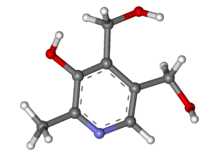
Pyridoxine, is a form of vitamin B6 found commonly in food and used as a dietary supplement. As a supplement it is used to treat and prevent pyridoxine deficiency, sideroblastic anaemia, pyridoxine-dependent epilepsy, certain metabolic disorders, side effects or complications of isoniazid use, and certain types of mushroom poisoning.[4] It is used by mouth or by injection.[4]



It is usually well tolerated.[4] Occasionally side effects include headache, numbness, and sleepiness.[4] Normal doses are safe during pregnancy and breastfeeding.[4] Pyridoxine is in the vitamin B family of vitamins.[4] It is required by the body to metabolise amino acids, carbohydrates, and lipids.[4] Sources in the diet include fruit, vegetables, and grain.[5]
Medical uses
As a treatment (oral or injection), it is used to treat or prevent pyridoxine deficiency, sideroblastic anaemia, pyridoxine-dependent epilepsy, certain metabolic disorders, side effects of isoniazid treatment and certain types of mushroom poisoning.[4] Isoniazid is an antibiotic used for the treatment of tuberculosis. Common side effect include numbness in the hands and feet.[6] Co-treatment with vitamin B6 alleviates the numbness.[7] Pyridoxine-dependent epilepsy is a type of rare infant epilepsy that does not improve with typical anti-seizure medications.[8]
Pyridoxine in combination with doxylamine is used as a treatment for morning sickness in pregnant women.[9]
Side effects
It is usually well tolerated, though overdose toxicity is possible.[4] Occasionally side effects include headache, numbness, and sleepiness.[4] Pyridoxine overdose can cause a peripheral sensory neuropathy characterized by poor coordination, numbness, and decreased sensation to touch, temperature, and vibration.[10] Healthy human blood levels of pyridoxine are 2.1 - 21.7 ng/mL. Normal doses are safe during pregnancy and breastfeeding.[4]
Mechanism
Pyridoxine is in the vitamin B family of vitamins.[4] It is required by the body to make amino acids, carbohydrates, and lipids.[4] Sources in the diet include fruit, vegetables, and grain.[5] It is also required for muscle phosphorylase activity associated with glycogen metabolism.
History
Pyridoxine was discovered in 1934, isolated in 1938, and first made in 1939.[11][12] It is on the World Health Organization's List of Essential Medicines.[13] Pyridoxine is available both as a generic medication and over the counter product.[4] Foods, such as breakfast cereal have pyridoxine added in some countries.
| This article uses material from the Wikipedia article Metasyntactic variable, which is released under the Creative Commons Attribution-ShareAlike 3.0 Unported License. |